Inside a Freight Farm: A Visit to Evan’s Container Garden
Inside a Freight Farm: A Visit to Evan’s Container Garden
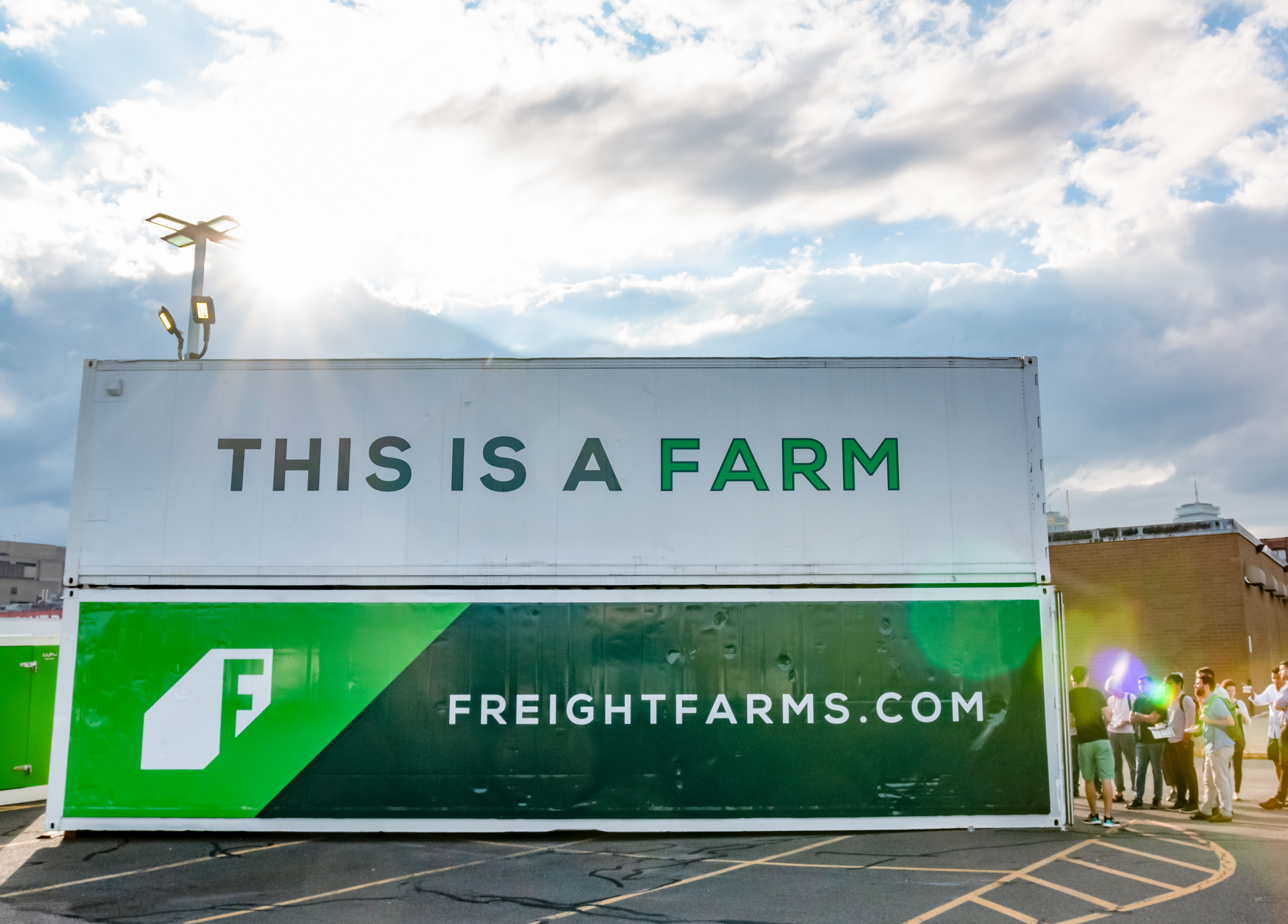
When a friend of mine at Watertown High School mentioned he’d set up a Freight Farm, I was really interested to hear details. It’s a full commercial-scale hydroponic farm running inside a repurposed 40-foot shipping container. I had to see it.
What Is a Freight Farm?
Freight Farms was a Boston-based company that built fully self-contained hydroponic growing systems inside standard intermodal shipping containers. They were bought in 2025 by Growcer, an an Ottawa-based agritech company that builds similar modular, containerized farms.
The pitch is simple: grow commercial quantities of fresh produce anywhere in the world, year-round, regardless of climate — all in a footprint smaller than a two-car garage.
The Engineering
This is the part that interests me most. Here’s what I learned:
Container details
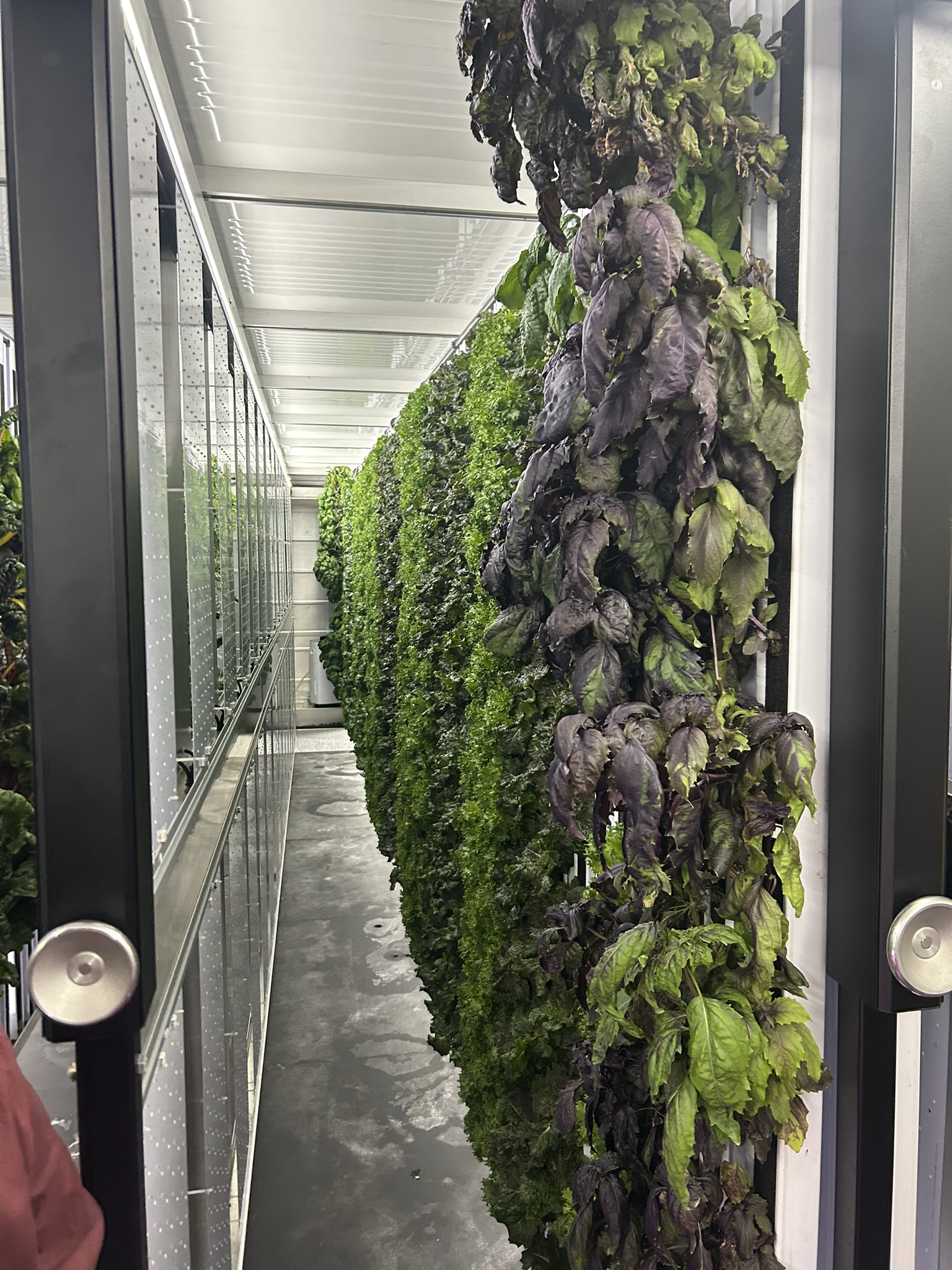
- The farm is built inside a standard 40’ x 8’ x 9.5’ intermodal freight container — the same kind stacked on cargo ships. That’s 320 square feet of floor space, but 4x vertical growing walls is the way to maximize this floorspace for produce.
- About 1/3 of the length is a ‘nursery’ area, with a desk, monitoring equipment, and horizontal shelves where plants can grow under lights.
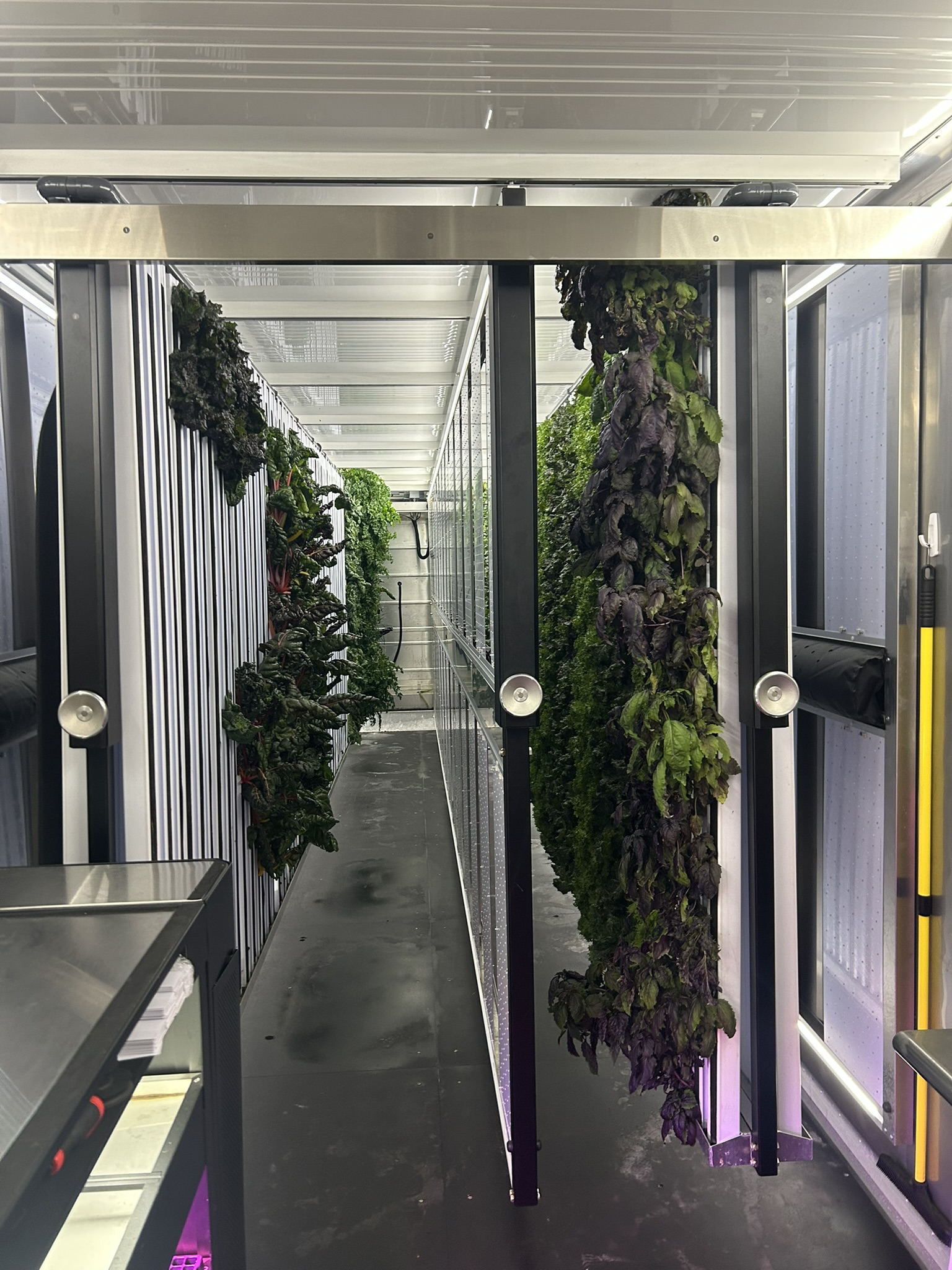
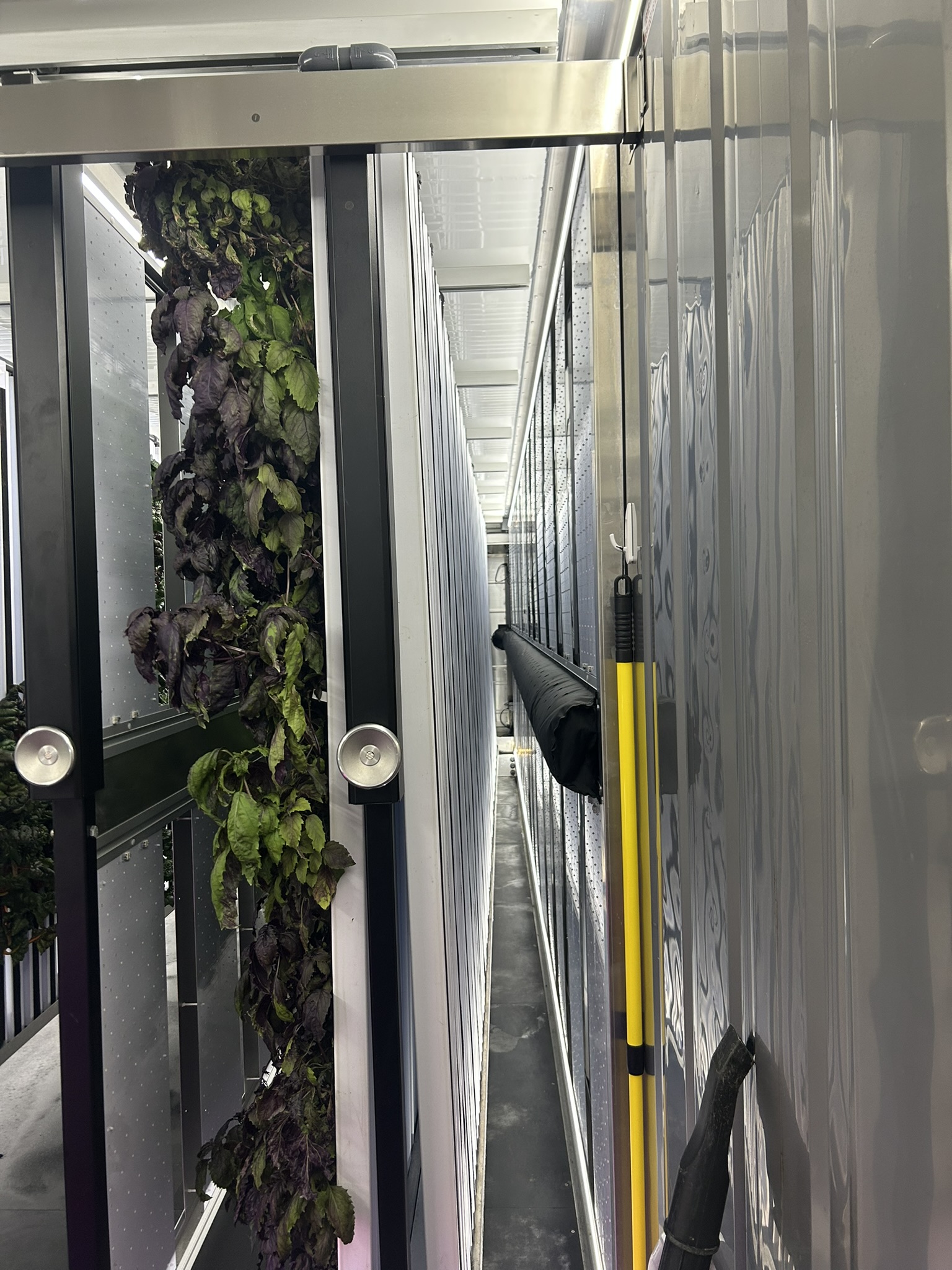
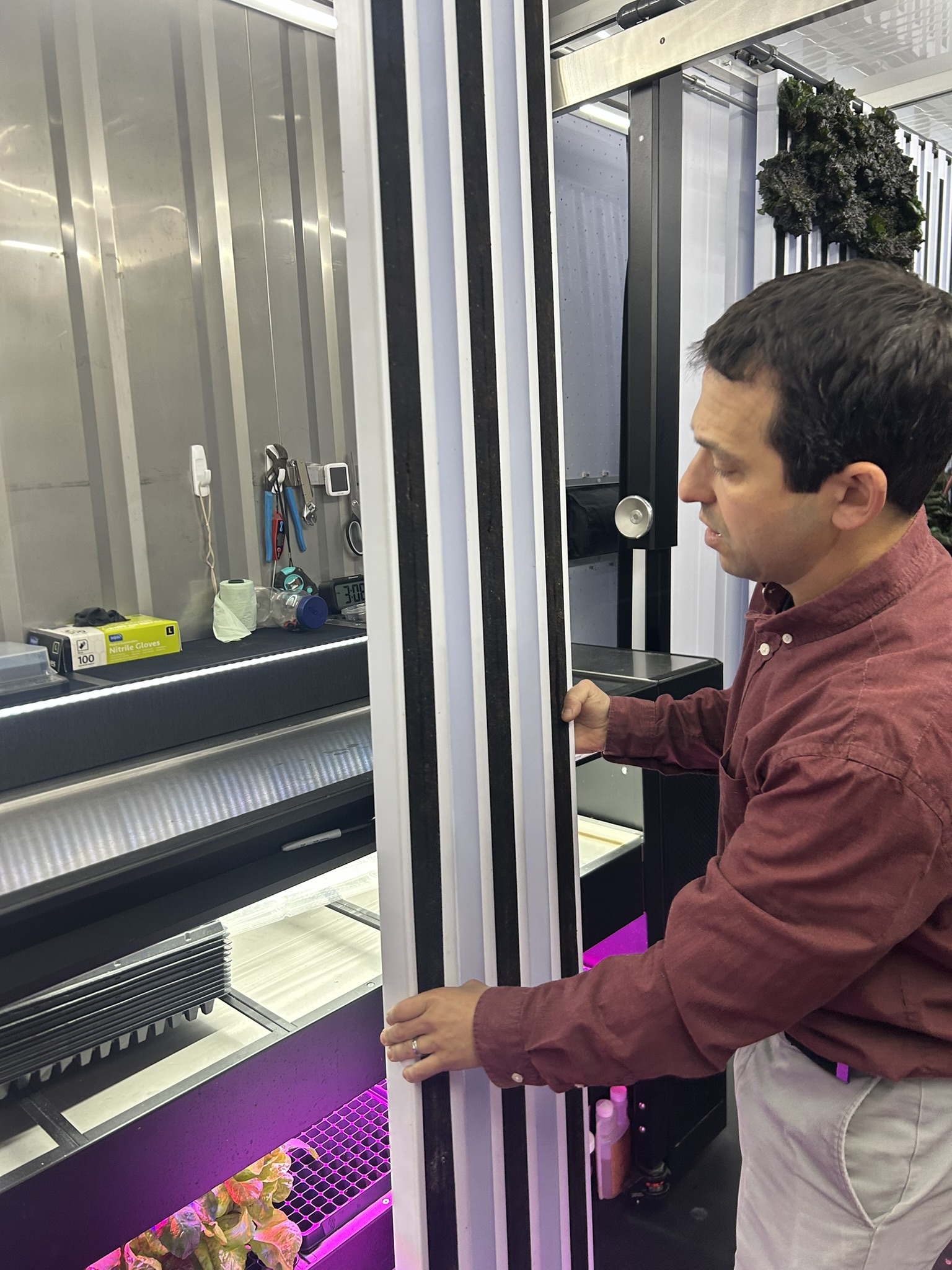
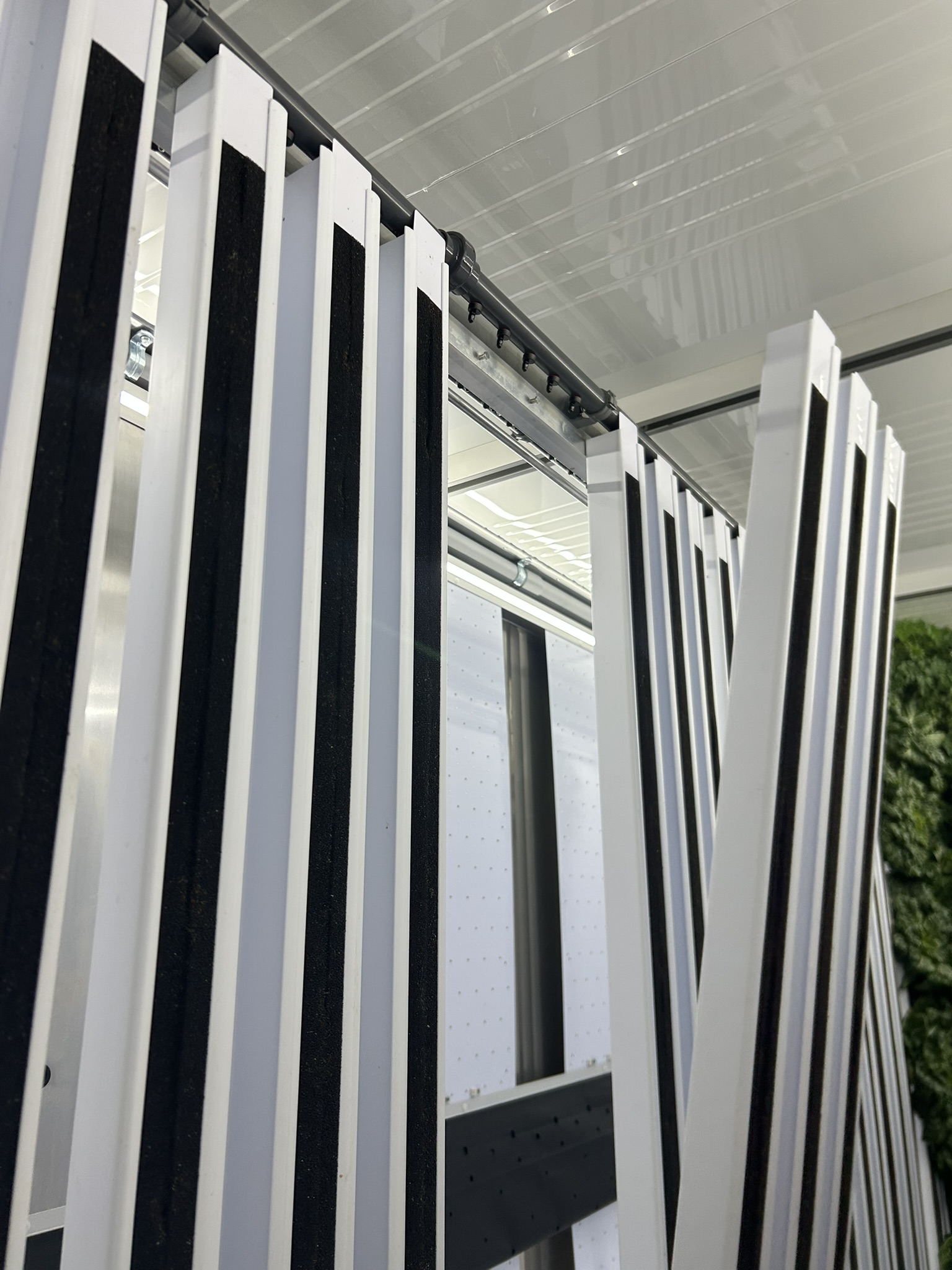
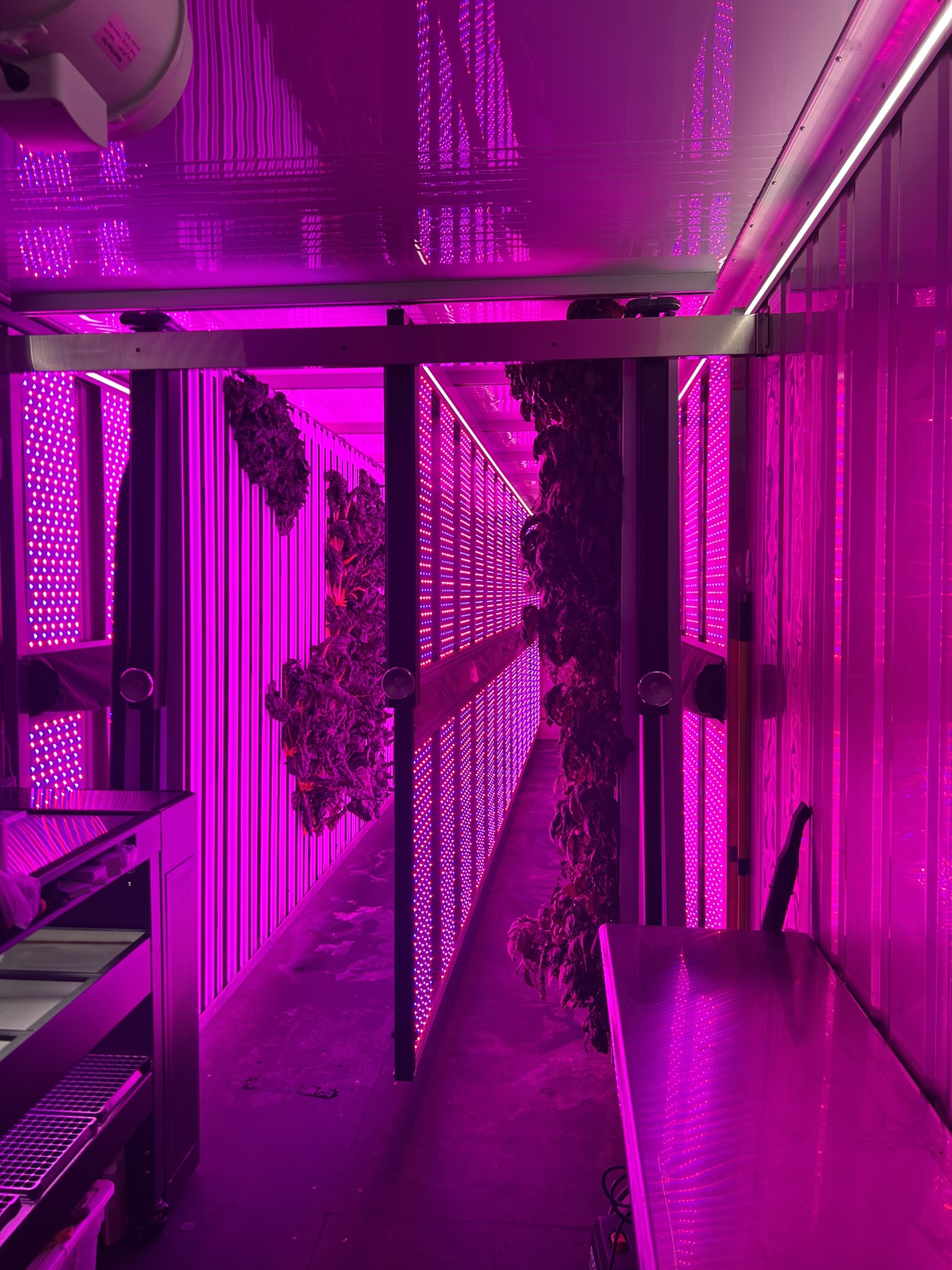
- About 2/3 of the length are for the verical growing walls, which slide left and right like heavy solid curtains.
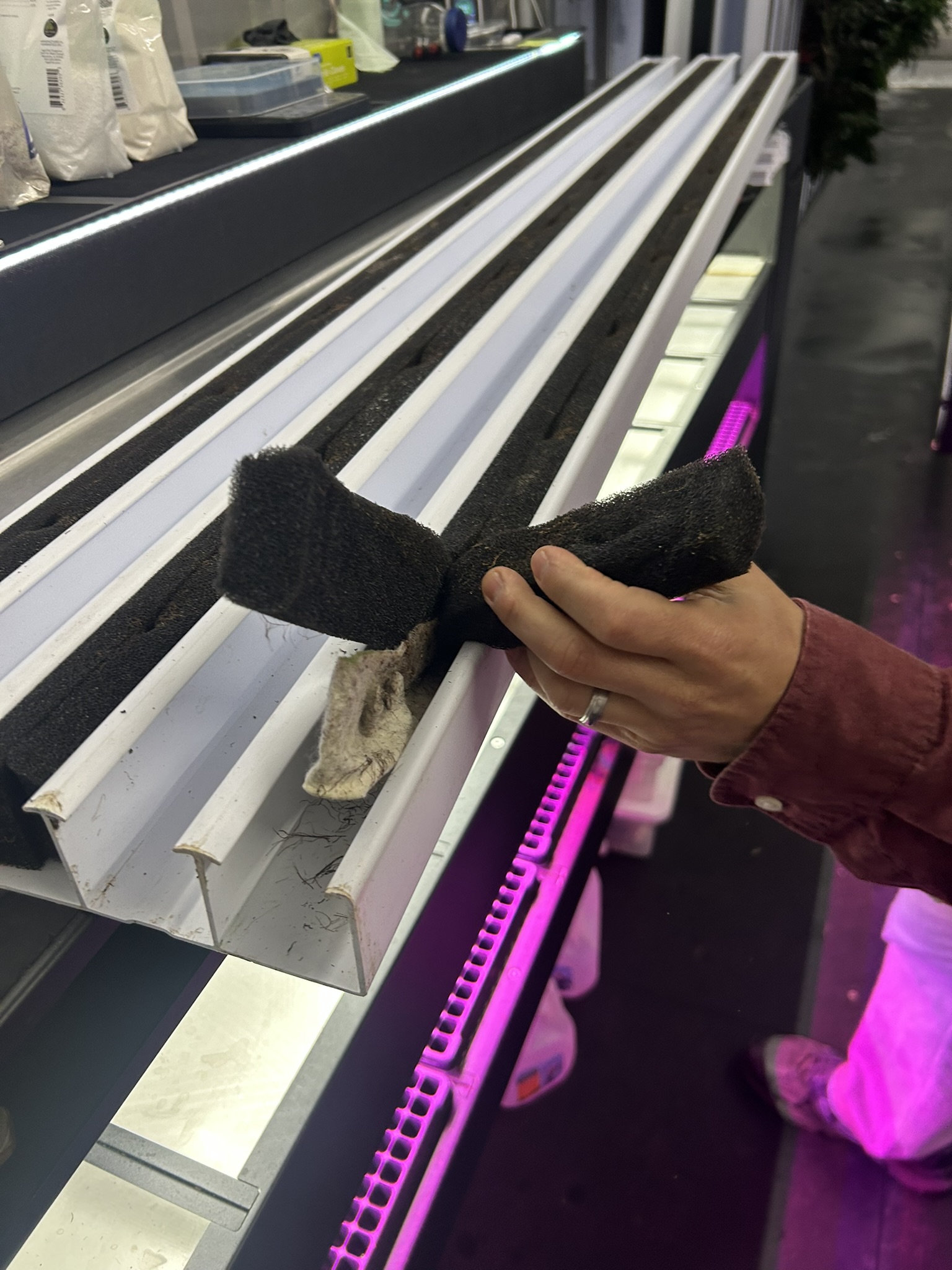
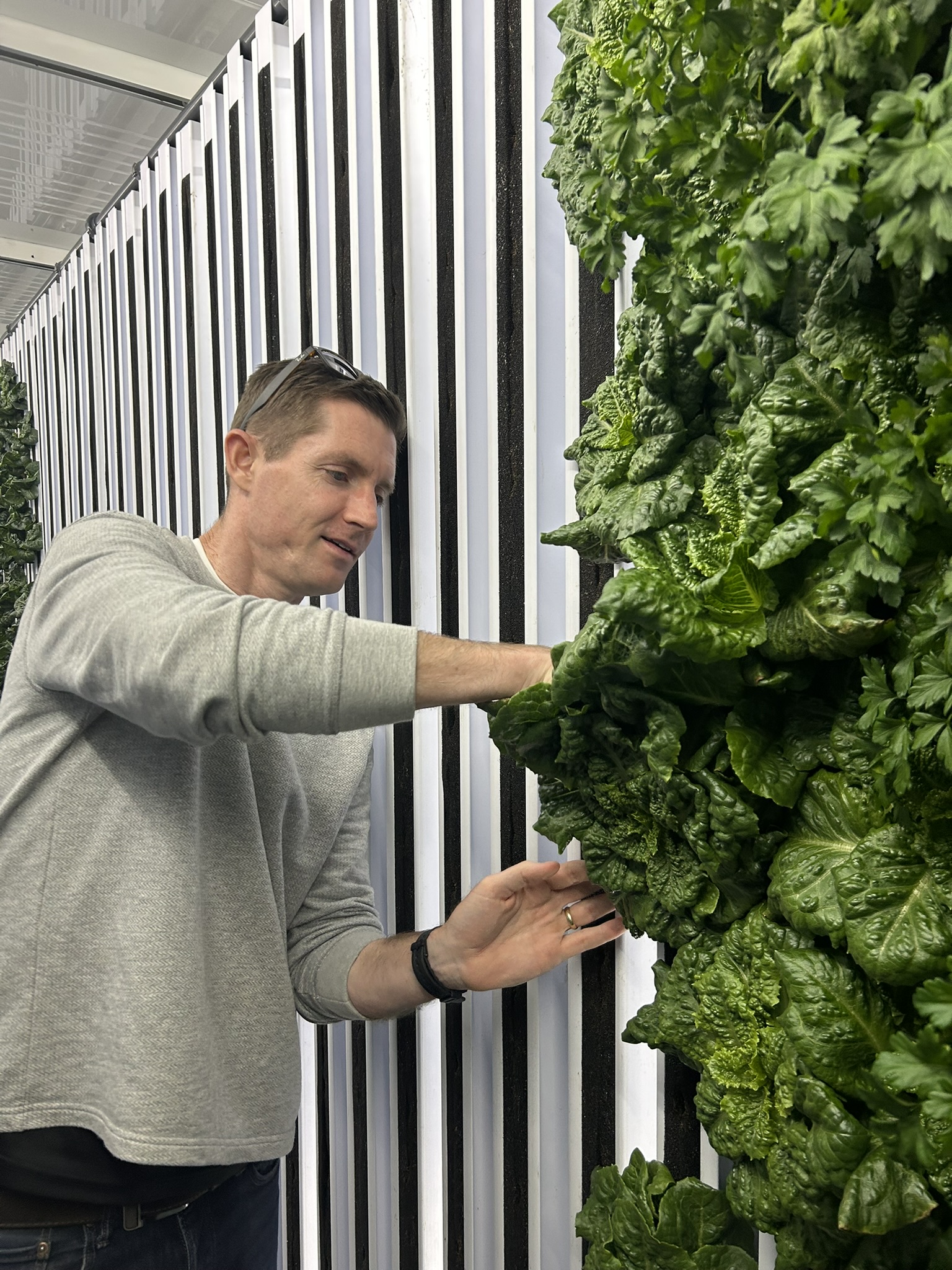
- Each wall has 22 racks, and each rack has 3 channels which can hold the root system of a leafy green (eg lettuce).
Systems
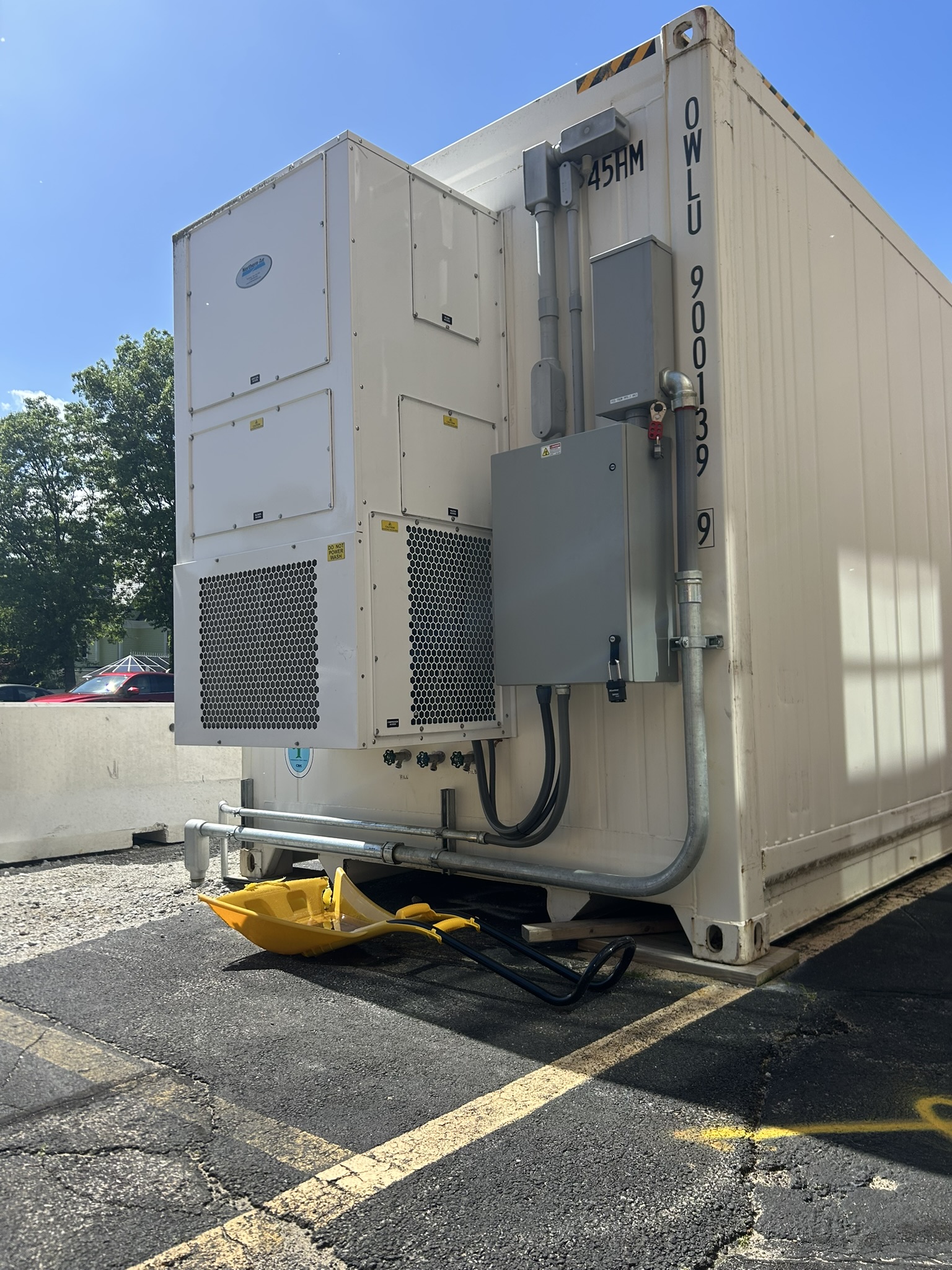
- There’s HVAC for temp control and R29 insulation (excellently insulated from outside temps). In summer you have to cool it, but in a cold Boston winter the lights generate so much heat that Evan did not need to use HVAC for heat at all.
- There’s two water tanks. One for the drip-fed vertical growing walls, and 1 for the nursery. They are fed by tap water, and nutrients are added separately for each tank. The soluble nutrients are in a powder form.
- There’s slick monitoring systems I didn’t dive into. But Evan controls many automatically with precision, including: temp, humidity, airflow, water pH, nutrient levels, lighting schedules, and CO₂
- Much is controllable via iPhone.
- There’s many manual tasks, including: cleaning algae from the bottom of the racks, mopping the floors and keeping disease/dirt out, engineering setup, planting and harvesting, sometimes pollinating (in the case of pollinating plants), and probably much, much more.
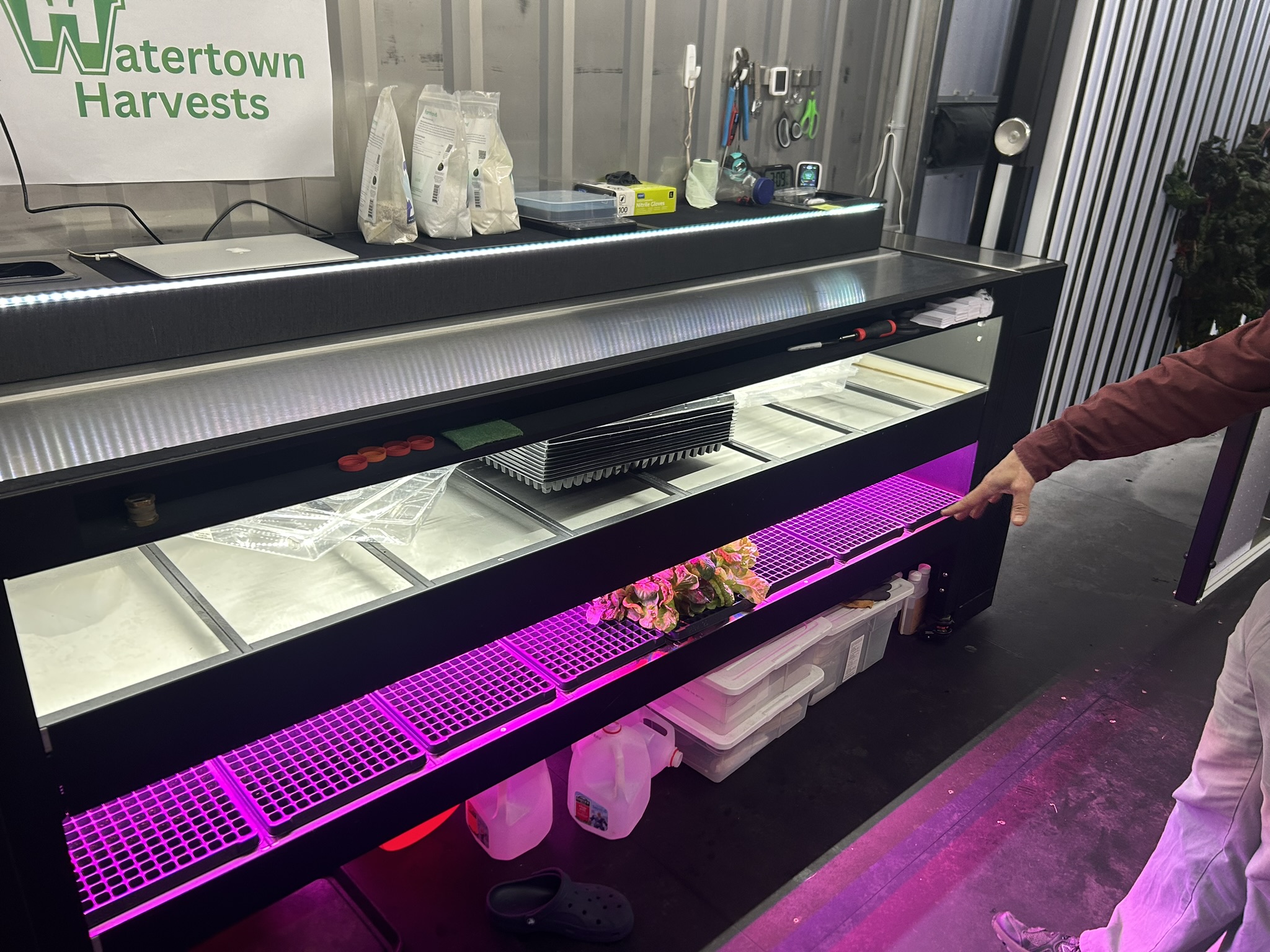
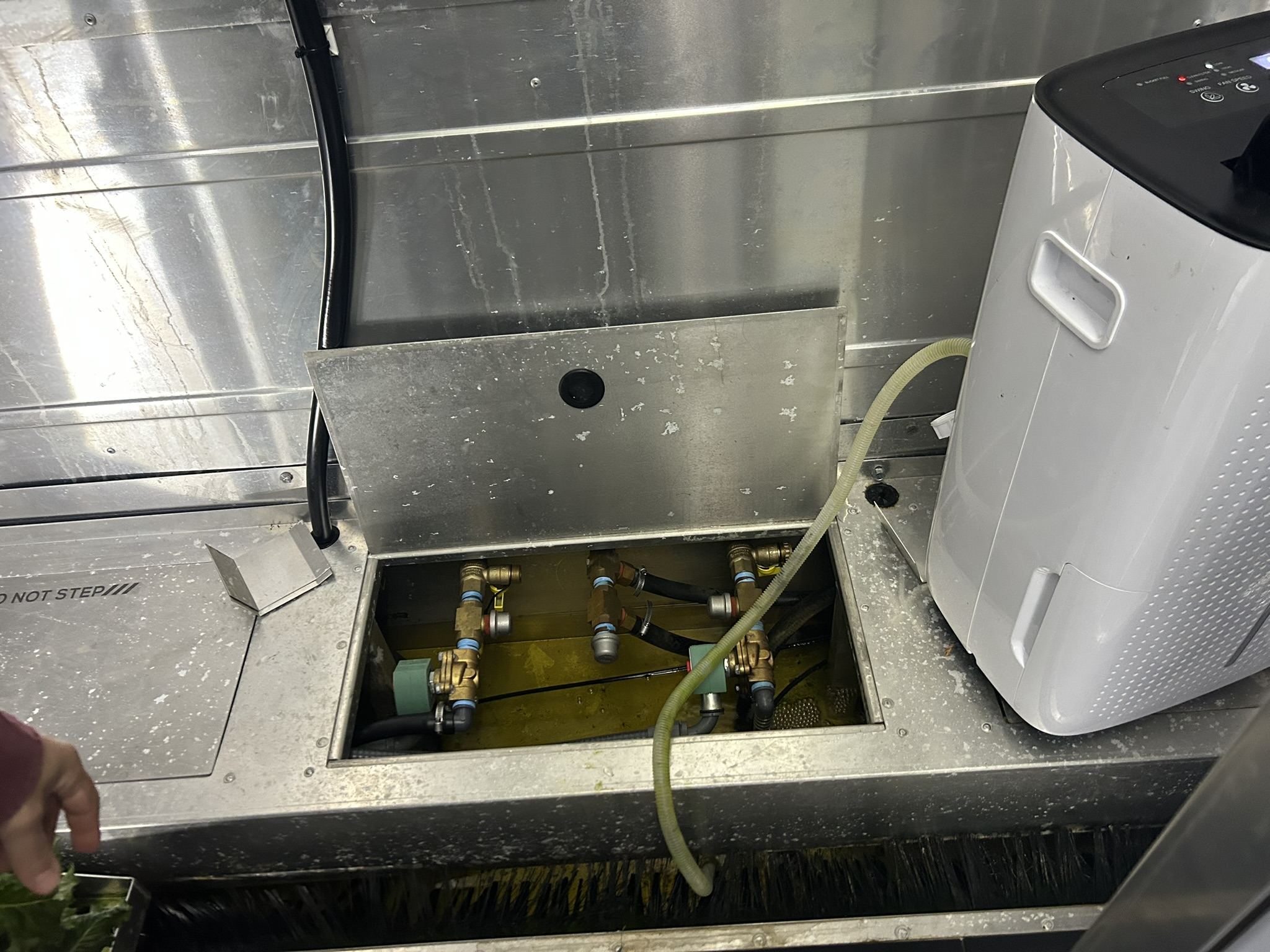
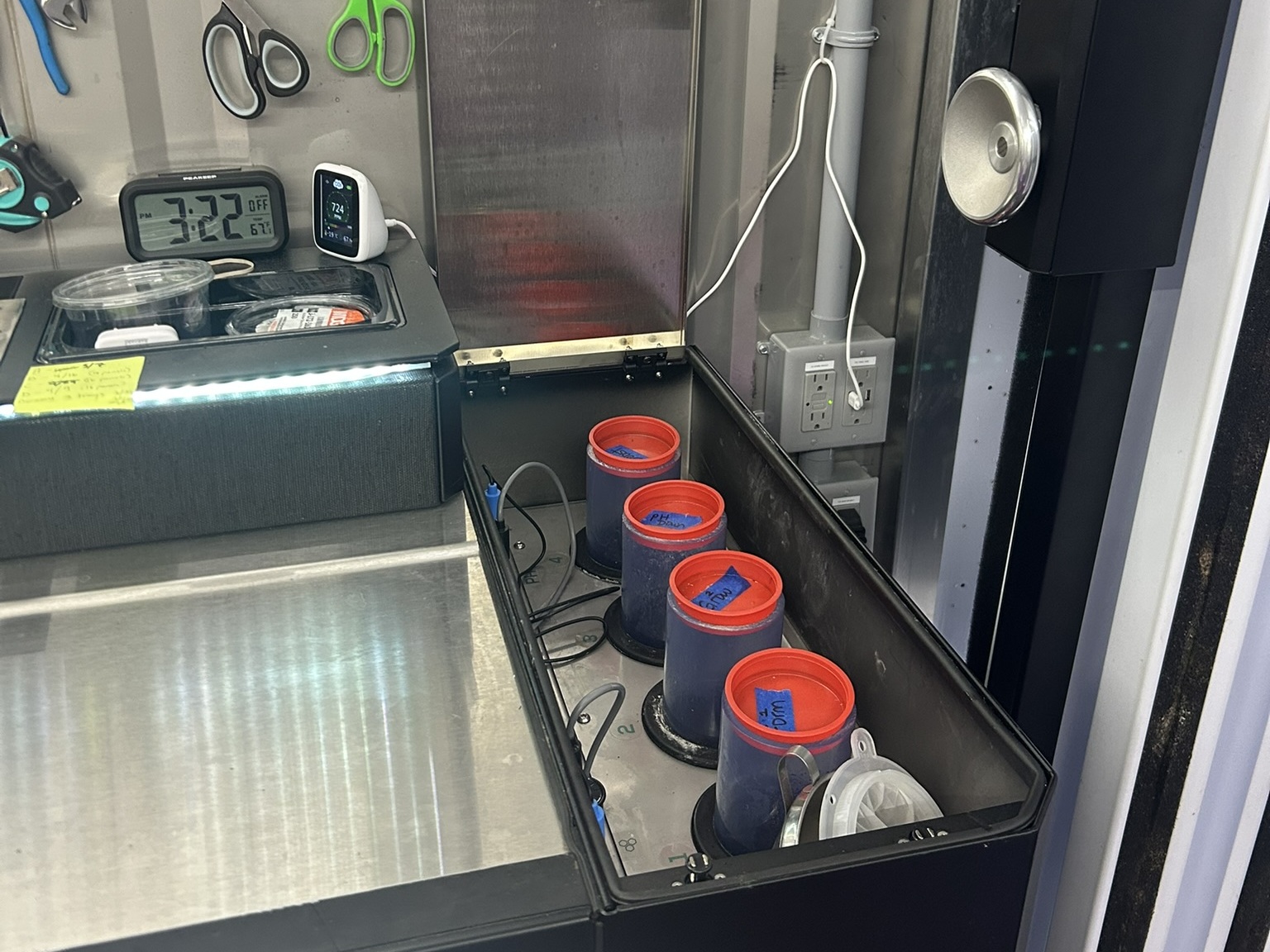
Opening the door is a little startling. You feel like you’re in a science lab. I guess you are.
Growing details
- There’s no soil. Plants grow in a closed-loop hydroponic system.
- Because it’s a recirculating system, water usage is about 5 gallons/day - dramatically lower than conventional agriculture.
- The lights run 17.5 hrs per day - about the maximum you can do to grow lettuces quickly.
- The lights are blue and red only! This maximizes photosynthesis.
- However when I Googled this fact, I read that recent models of these farms use full-spectrum LED’s because some green and far-red colors also help plant growth.
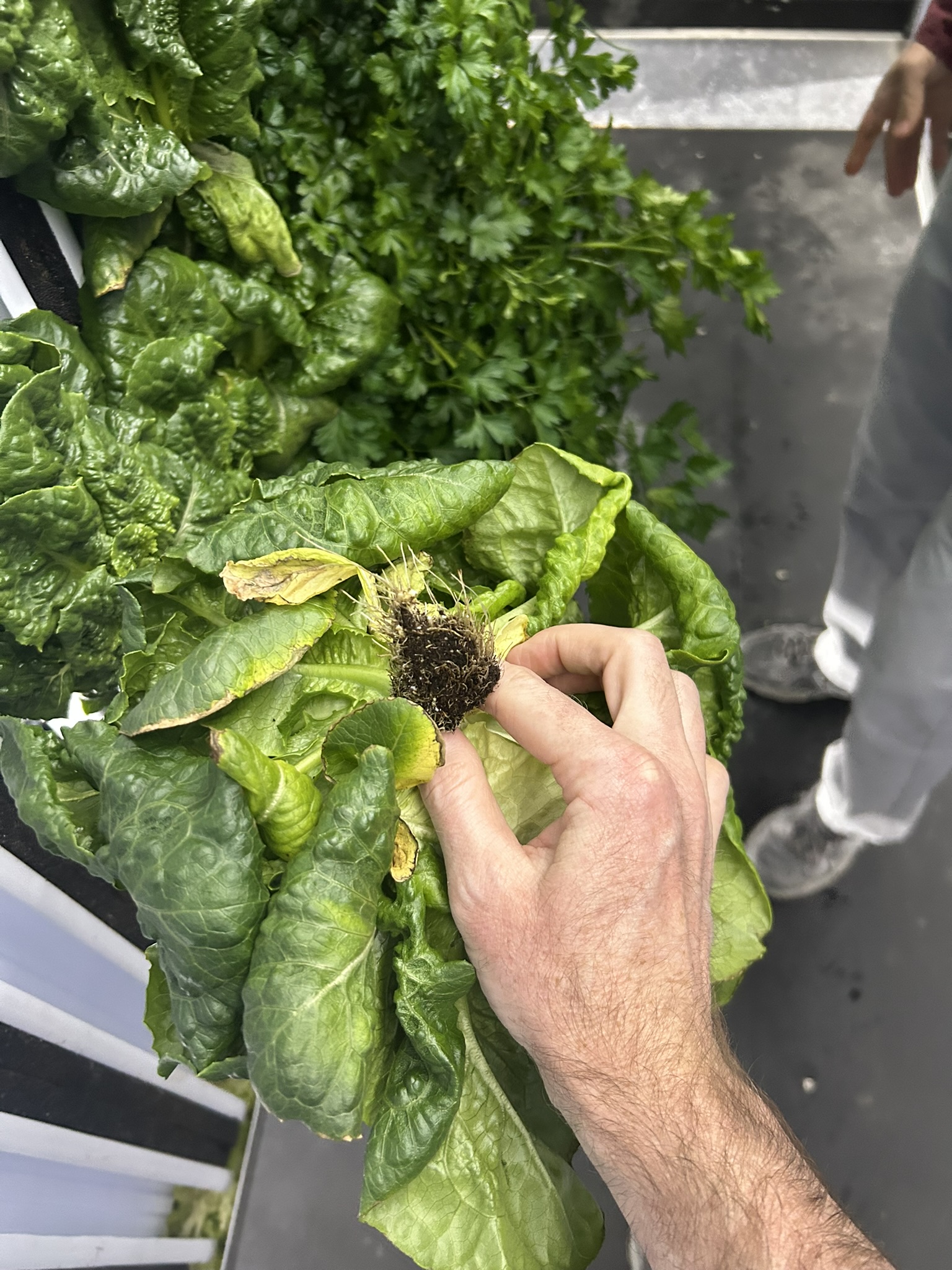
- Every 5 mins or so, the wall plants are watered by drip. Because it’s frequent, small amounts of water, the roots don’t need to develop much. The root systems are tiny, making this method very efficient
- less % of weight is roots, more is leaf
- plants are very easily plucked from the wall
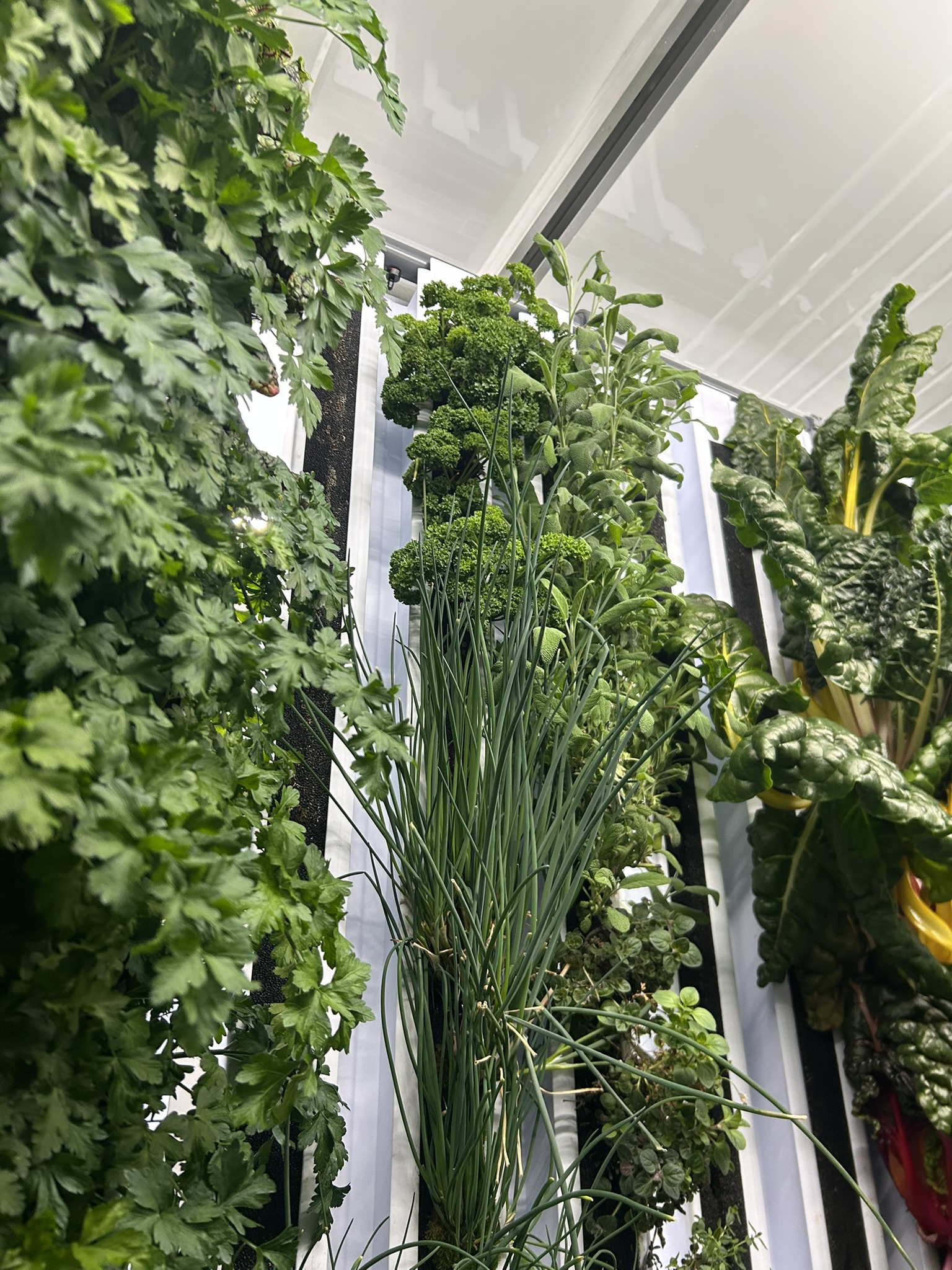
- Evan reported that 792 lettuce heads per week would be about his max output. In the photos you’ll see other plants and empty racks because the school year is nearing end.
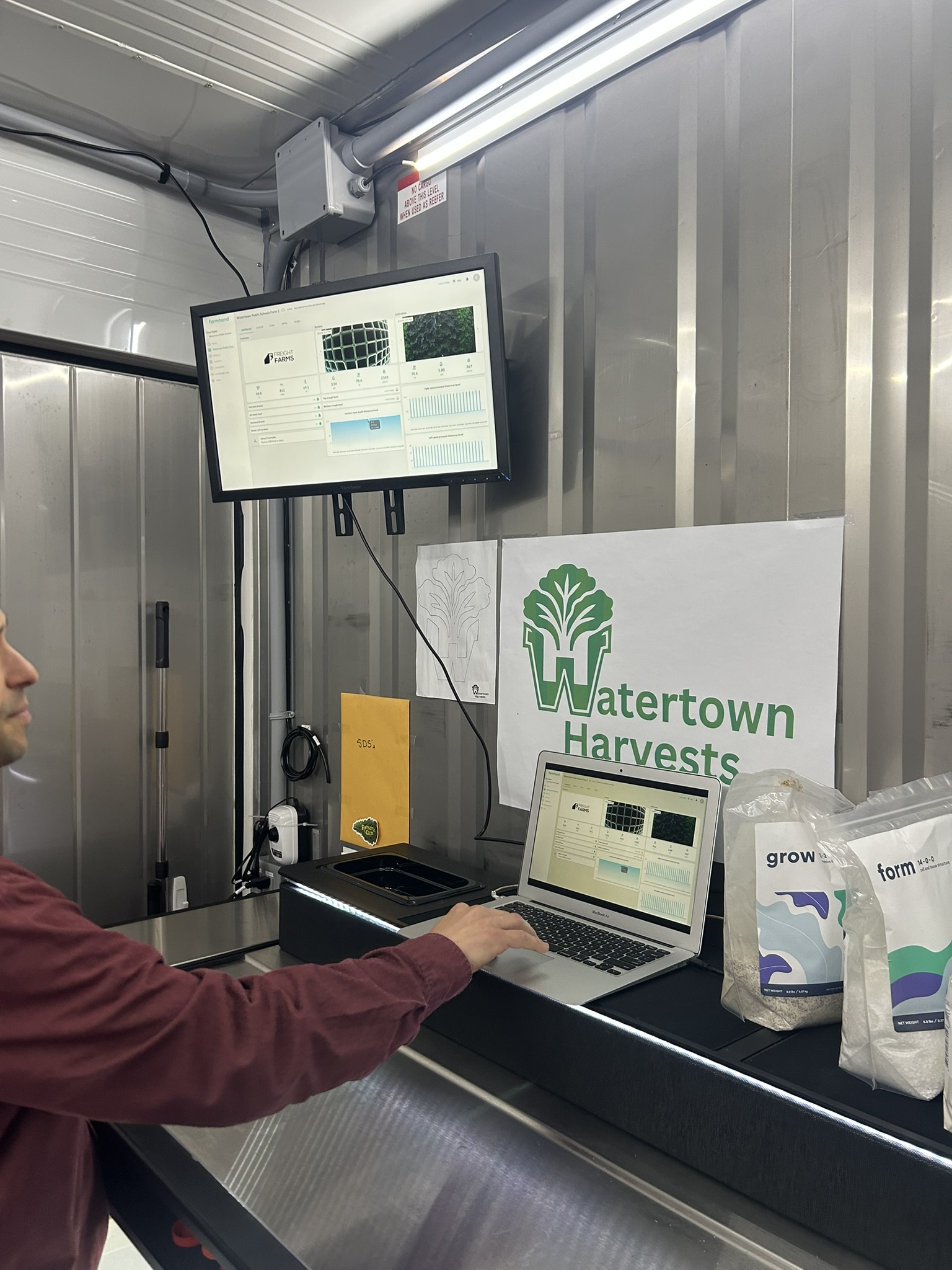
Other things I learned online after my visit
Yield vs. Footprint
Despite the small footprint, the Leafy Green Machine can produce as much food in a year as roughly 1.7 acres of traditional farmland. That’s the equivalent of an entire football stadium of outdoor farming happening inside a container smaller than an end zone.
Climate Control and Energy
The original LGM used about 120 kWh of electricity per week, roughly what a typical family of four consumes at home. The newer Greenery S runs higher depending on the mode (standard mode averages 171–268 kWh/day for the larger unit).
Power and Water Requirements
Hooking one up requires a 60-amp, 120/240-volt single phase (or 120/208V three-phase) electrical connection, and a standard water source like a garden hose or hardline plumbing. For a backyard installation, that’s achievable with some planning.
What It Grows
The system is optimized for leafy greens and herbs — butterhead lettuce, oakleaf lettuce, kale, Swiss chard, mustard greens, basil, and similar crops with high turnover rates.
Labor
It’s a significant effort for one single farm manager, because every day requires tasks. Small, regulary tasks require Evan to run to the container between classes. He has needed to visit the farm for tasks requiring human hands, even during vacations. He lives close by, but to scale beyond a container would require significant labor or team management, I imagine.
Considering all of this science, the systems, and the human management input, the output of the farm is extremely impressive!
Takeaways
A few things that stuck with me after the visit:
- It’s legitimately a farm. Five schools in the district get all of their lettuce from this farm.
- The hardware engineering is cool. Every cubic foot of the container is used. Designers thought hard about workflow, ergonomics, and reliability.
- The software/IT is cool. As IoT and robotics become such an integrated part of life, I’m excited to see this become commonplace in systems. I am not sure if/how AI helps large-scale farming, but I imagine it could.
- It feels like the future of farming. I couldn’t help asking questions like “how do we scale this to feed 10 billion humans on Earth?” or “how do we make this viable to feed a city?”.
- It’s for more people than you’d think. Students interested in farming, IT, sustainable practices, industrial engineering, IoT, and commercial/industrial software would all benefit from managing this.
Thanks to Evan for the tour! I hope I can see this again at some point.